The first Floridians were the American
Indians. Some twenty-five thousand years before the birth of Christ, when North
America was still inhabited by prehistoric beasts, small tribes of primitive
hunters crossed the frozen wastelands of the Bering Strait from Asia to the
Florida was probably one of the last places in the
Americas to have human inhabitants although every year earlier and earlier
remains of first Floridians are discovered in springs such as Warm Mineral
Springs, south of Sarasota. These early
Paleo-Indians (c. 12000 B.C. to 7500 B.C.)
were nomadic hunters, using crude spears and arrows of flint and stone. The
fire drill was their highest technology. In the mild climate of
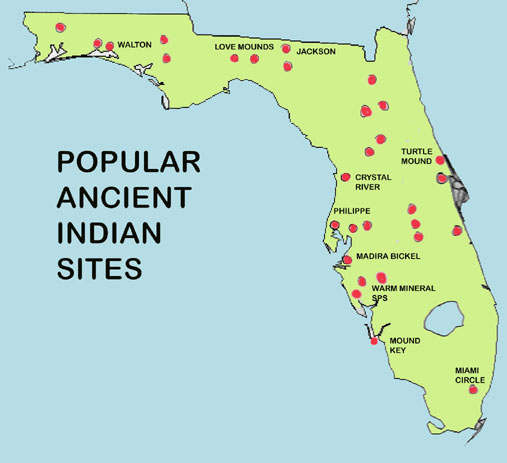
Eight thousand years ago the earth started to warm and Florida became smaller and more tropical. Centuries of
The Formative
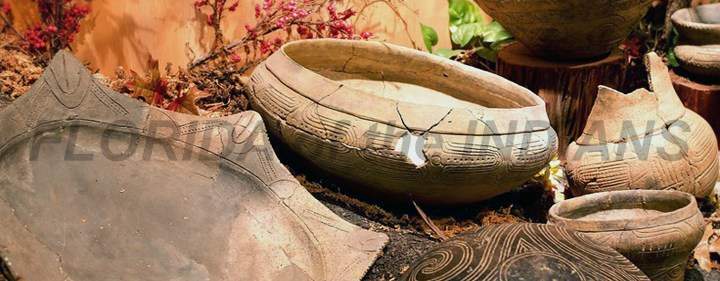
Era (1000 B.C. to 1500 A.D.) brought farming and pottery skills.
Commerce with Indians outside
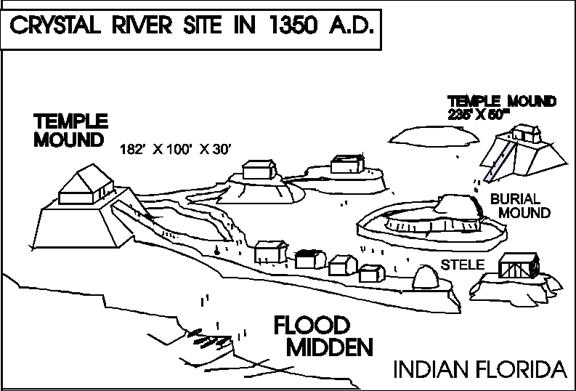
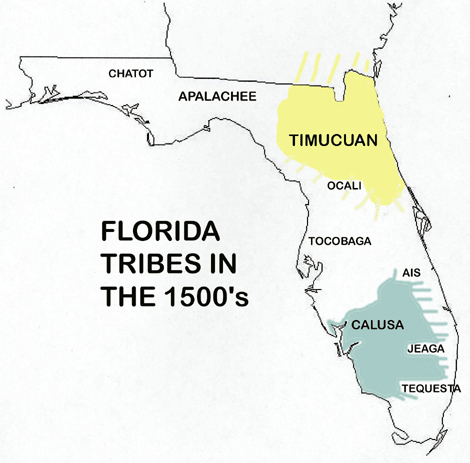
About 500 years ago the native people became known as the Woodland Indians. In North Florida lived two highly
organized, farming tribes the Apalachee of the Tallahassee Hills
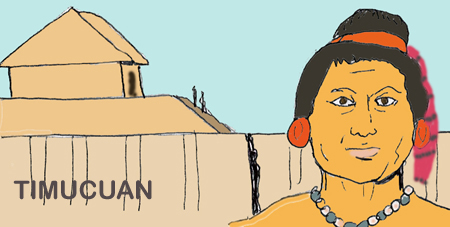
and the Timucuans,
located between the Aucilla River and the Atlantic
Ocean as far south as Tampa Bay. These people were latecomers to
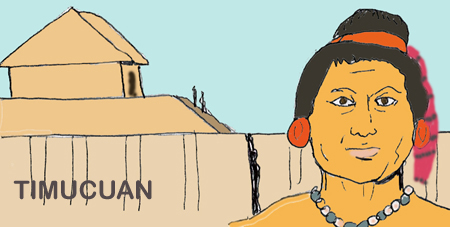
The Timucuans and Apalachees were divided into numerous independent villages,
each with a leader. An inter tribal dialect developed
by traders united the tribes. In the summer, the planting of maize, squash, and
beans dominated village life, while in the lean months of winter, hunting deer,
turkey, and small game in the forests became important. Meat was smoked on open
grills and stored in pine needle baskets or clay containers in tribal
warehouses.
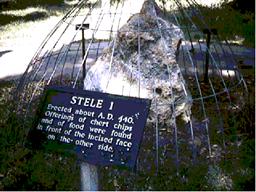
Stele at
A typical Timucuan village sometimes consisted of a cluster of small huts surrounded by a circular twelve foot high wall of
tree trunks. A single opening led to the village plaza where the cacique or chieftain resided and the
tribal granaries were located. Along the perimeter of the wall were humble
family dwellings, furnished only with beds of reeds, three legged stools, and
food storage pottery.The presence of a good water supply was the key not just for drinking, bathing, and cooking, but for fishing, hunting, and collecting food.
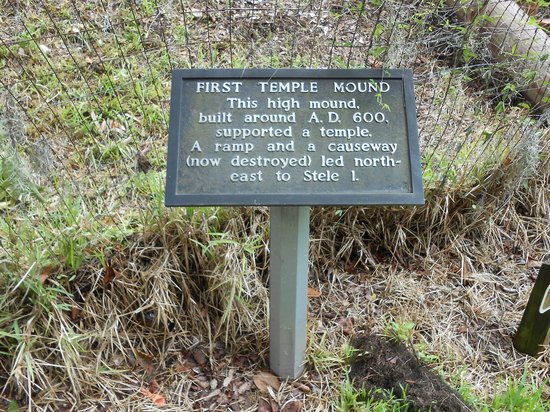
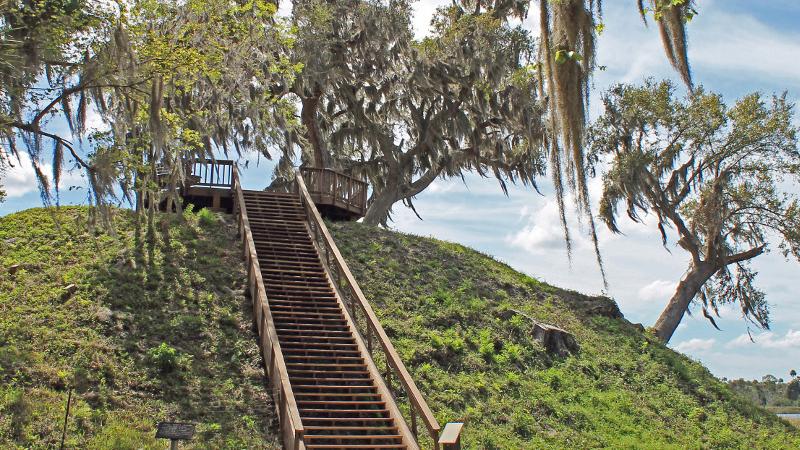
The Timucuans practiced a
rigid feudal system. The absolute rulers were the cacique and his council of noblemen. Their chief ally was the shaman, or medicine man, who performed
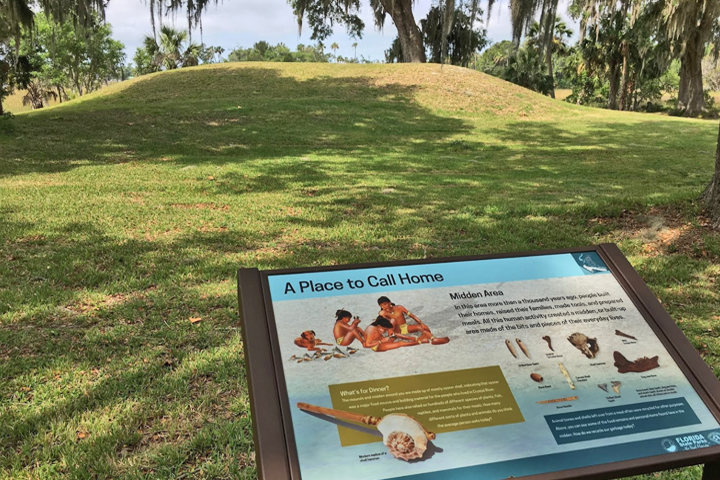
all necessary rituals. Large burial mounds and temple mounds for sacrifice to
the sun god showed the impact religion had on their daily lives.
Each Indian was born into a particular occupational
status in the village, and only a major crisis altered the predetermined story
of a person. Warriors and hunters were the most common job, but skilled potters
and canoe makers were given great status. The aged, women, and children did
most of the planting and probably accumulated the most food. This division of
labor reflected a stable, complex agrarian society.
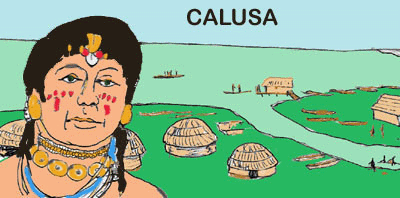
Along the southwest Gulf coast lived the Calusa (Caloosa) Indians. A new tribe that entered
They were powerfully built men, often four inches
taller than their European counterparts. In the warm
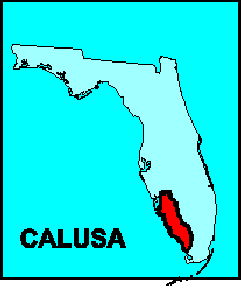

The Calusa were great
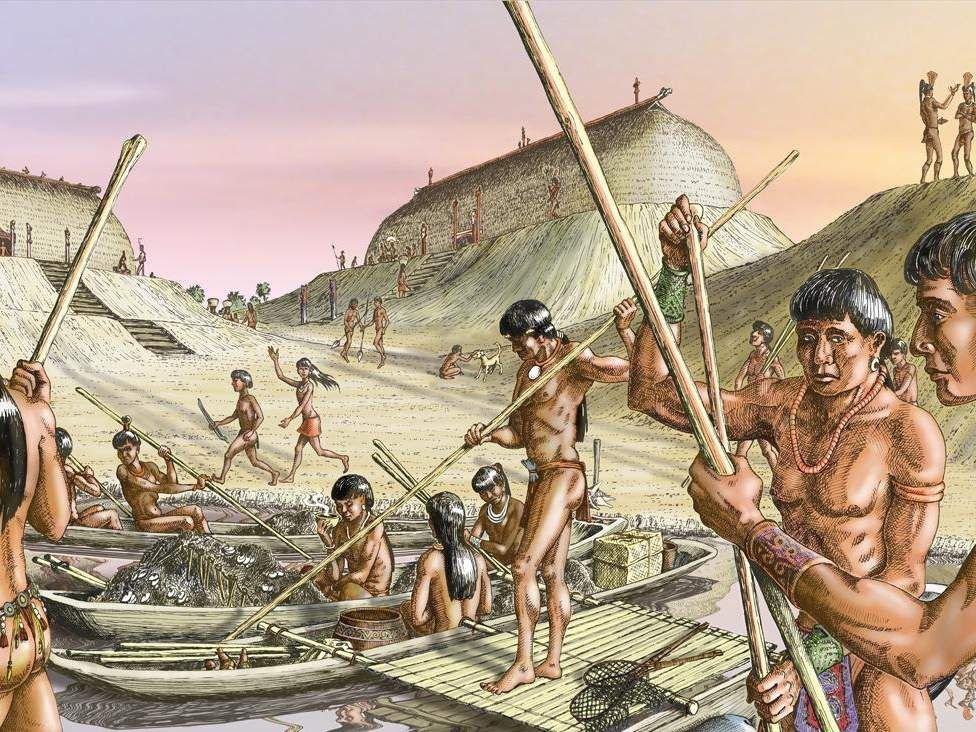
sailors. Their large canoes of hallowed out cypress logs were capable of
reaching
PINELAND on
Some
forty coastal villages spread along the
The Calusa's reputation was well established. The hereditary
chief and the dolman or priest ran the villages. They practiced sacrificial
worship and demanded obedience from all villagers. The Calusa
had a rather closed society and the Spanish would discover little interest in
missionary activity from the Calusa.
The
Along the lower